 Konrad Völkel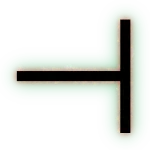
In this lightheaded post (written long time ago) I want to share with you some fundamental adjunctions that are the "source" of various other adjunctions that pop up all over in mathematics (well, at least all over algebraic topology).
claimtoken-5399a1ffcd81c
A baby case
Let be sets, and denote by the set of set-theoretic maps . Then
This is sometimes called Currying or Schönfinkeln, and it really boils down to
Definition
An adjunction is a pair of functors , between categories together with a natural transformation of functors
In the baby case above, and is adjoint to .
We call the left adjoint to and the right adjoint to . The notation ⊣ can be quite useful.
You should care about adjunctions, because their existence implies nice properties: is always cocontinuous (preserves colimits) and is always continuous (preserves limits). This comes from the continuity properties of . There is also a theorem (Freyd's AFT) that describes precisely which extra condition a functor has to satisfy, besides continuity, to be a right adjoint.
Another example comes from vector spaces:
where we give the vector space structure via .
In fact, this is basically the definition of the tensor product, if you watch closely.
In homotopy theory, one often uses the adjunction
between suspension and loop space (where the brackets denote the morphisms in the homotopy category). From the definitions, is a quotient of and is a subspace of , and the source of this fundamental adjunction is the baby case above.
Forgetting Adjunctions
To a lot of "forgetful" functors, like from rings with unit to rings not-necessarily-with-unit, from abelian groups to arbitrary groups, from abelian groups to abelian monoids, from compact Hausdorff spaces to arbitrary topological spaces, one can construct left adjoints which give some sort of "free" objects. For example, to any topological space one can assign the Stone-Cech compactification, and to every abelian monoid one can assign the Grothendieck group.
Limits and Colimits
For categories we can form the functor category of functors and consider the diagonal functor which maps every object to the constant functor. If it has a right adjoint, then we call it Limit () and write
If it has a left adjoint, then we call it Colimit () and write
Such a (co)limit functor exists iff all (co)limits exist in the ordinary sense.
There would be much more to write (e.g. about nerves and realizations) but I'll stop here to prevent this from rotting in the draft section.
Except, I couldn't resist [UPDATE 2014-06-12]:
The nerve of a category
Given a category we can look at all chains of arrows of length , i.e. such that one has a composition . Such a chain of length can be mapped to a chain of length by merging two adjacent arrows into and it can be mapped to a chain of length by inserting identities. All this structure together forms a simplicial set called the nerve, whose -simplices are precisely the chains of arrows of length . This construction if functorial, and it admits a left adjoint that associates to a simplicial set its "homotopy category":
A better (well...) explanation of the suspension-loop space adjunction
Write for the homotopy category of a category with weak equivalences, then we have a derived version of the lim and colim adjunctions:
Specializing this to the diagrams being (for holim) and (for hocolim) we are talking about homotopy pullbacks and homotopy pushouts. Now plugging in a terminal object for the outer things, and an arbitrary object in the middle, we get diagrams in like , whose holim is called and whose hocolim is called .
At this point you should probably try to see that the ordinary suspension and loop space fulfill these universal properties in the category of topological spaces.
Anyway, writing down explicitly the holim and hocolim adjunctions for these particular diagrams, you see the adjunction immediately. I guess this is called "synthetic homotopy theory" and it's beautiful, isn't it?